
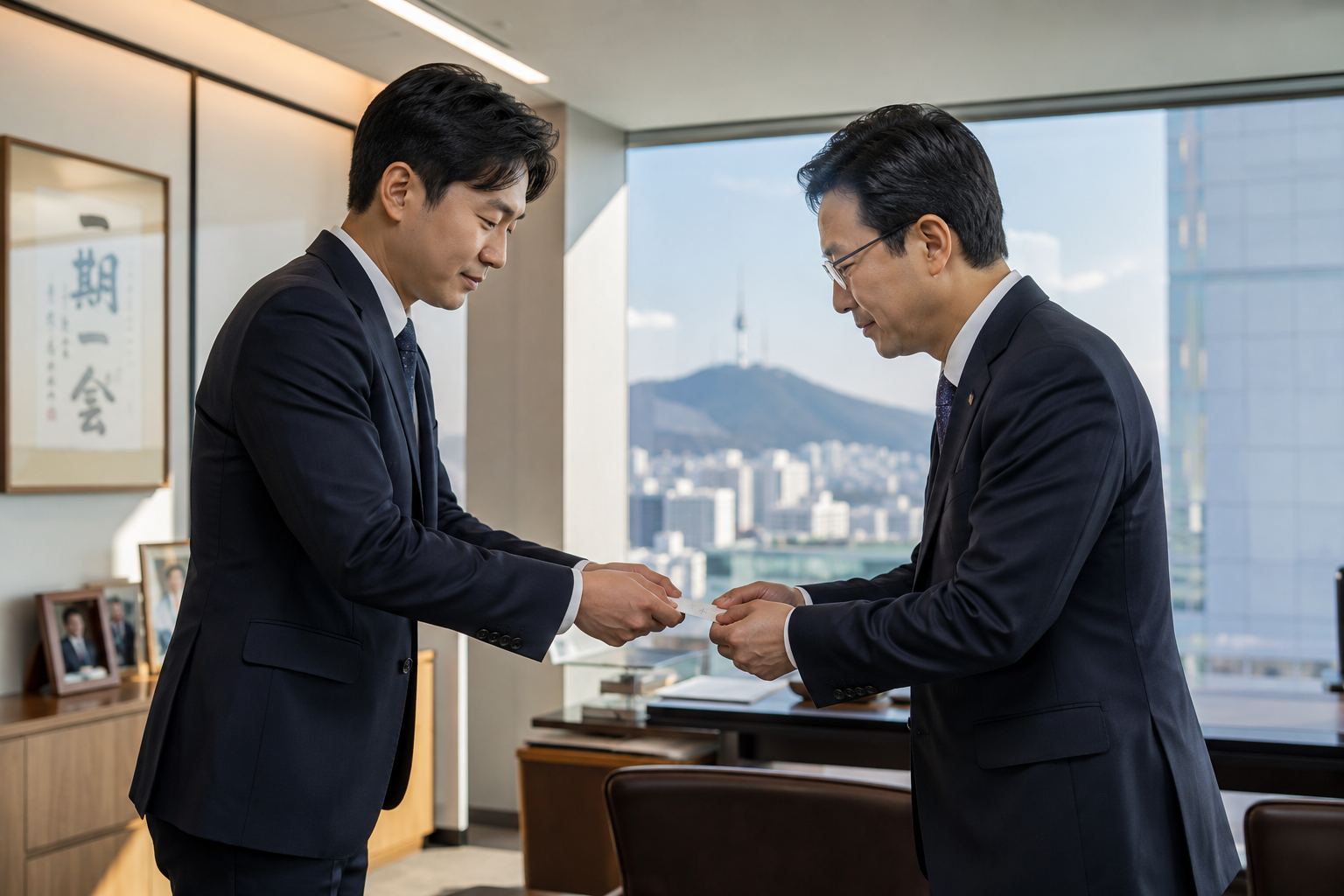
South Korea is a global powerhouse in technology, manufacturing, and international trade. However, for foreign professionals entering this market, navigating the corporate culture can be surprisingly complex.
Whether you are visiting a tech hub in Gyeonggi-do for a supply chain audit, discussing quality management standards, or simply attending a routine office meeting in Seoul, understanding proper Korean business etiquette is the secret key to building strong partnerships.
Here is everything you need to know about Korean business etiquette to make a perfect first impression.
1. The Ritual of the Business Card (Myeongham)
In many Western countries, business cards are casually handed out or stuffed into a pocket. In South Korea, a business card represents the person’s professional identity and must be treated with high respect.
- How to Exchange: Always give and receive a business card with both hands. When you receive it, do not put it away immediately. Take a few seconds to carefully read the name and title.
- Meeting Tip: Place the received cards neatly on the table in front of you during the meeting. Never write notes on someone else’s business card!
2. Titles Matter More Than Names
One of the most important rules in Korean corporate culture is the strict hierarchical system. Addressing someone correctly shows that you respect this system.
- What to Say: Avoid using first names unless explicitly asked to do so. Instead, use their family name followed by their official job title (e.g., “Director Kim” or “Manager Lee”). If you are unsure of their exact title, simply adding “Mr.” or “Ms.” to their family name is a safe fallback.
3. The Importance of Punctuality and Dress Code
First impressions are everything in Korea, and punctuality is heavily deeply ingrained in the culture. Being “on time” in Korea actually means arriving 10 minutes early.
- Dress Code: The business environment leans towards conservative and formal. For initial meetings, a dark suit and tie for men, and a professional suit or conservative dress for women, is highly recommended. As relationships develop, the dress code may shift to business casual.
4. Reading the Room: The Concept of “Nunchi”
If there is one cultural concept you must understand, it is Nunchi. This translates directly to “eye measure,” but it really means the ability to read the atmosphere and understand unspoken social cues.
- Why It Matters: Korean communication is often indirect. Direct confrontation or flat-out saying “no” in a meeting is rare, as it causes a “loss of face” (embarrassment) for both parties. Pay attention to body language and subtle hesitations instead of just the spoken words.
5. Trust is Built After Hours (The “Hoesik”)
The formal meeting room is where you discuss contracts, but the real trust is built after work. Company dinners, known as Hoesik, are an essential extension of the business day.
- The Bonding Experience: These dinners usually involve Korean BBQ and sharing drinks. Attending these dinners shows your commitment to the partnership. (If you want to survive these dinners, check out our previous post on [Korean Drinking Culture and Soju Rules! – https://funloglab.com/korean-drinking-culture-soju-rules-2