
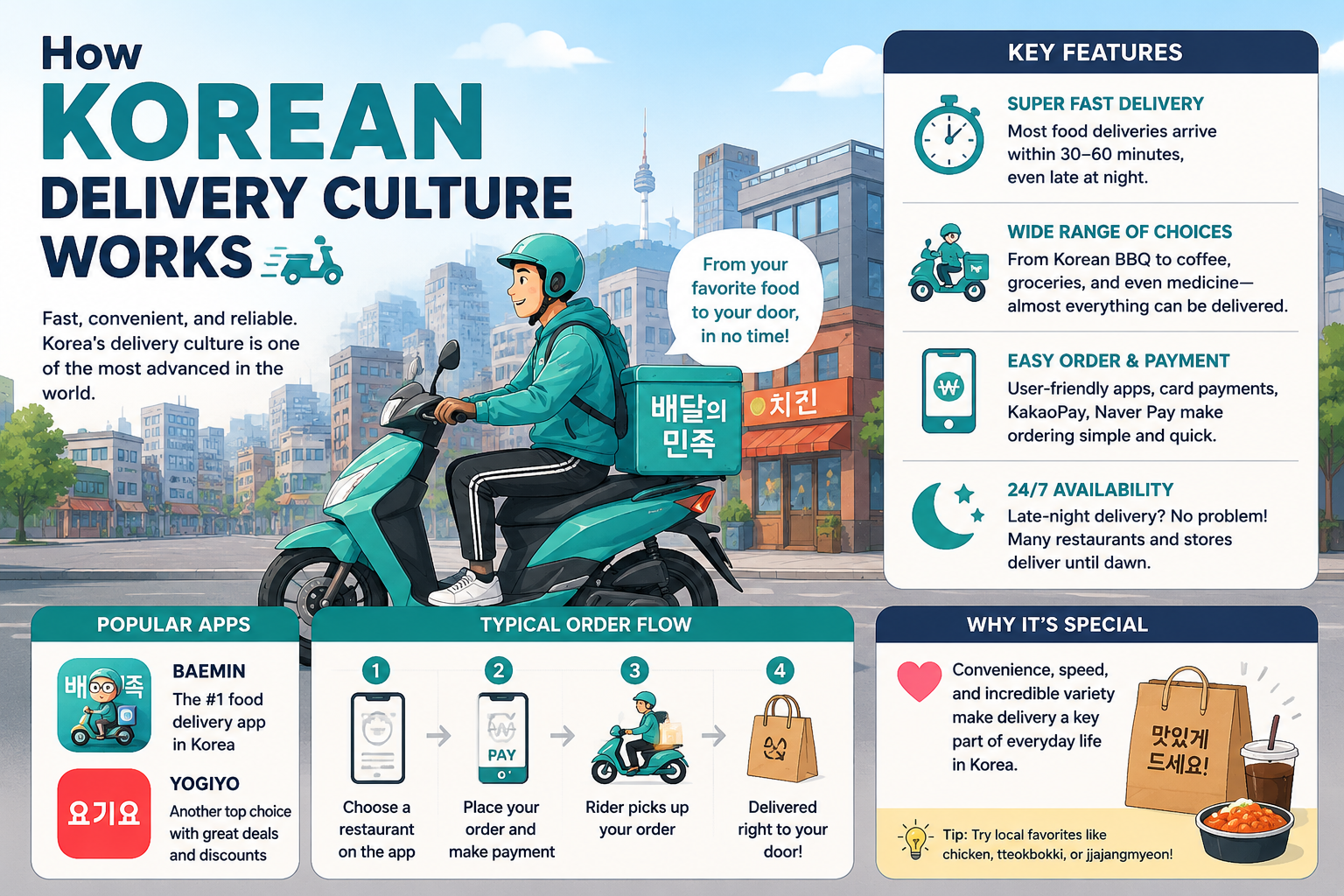
If there is one thing South Korea does better than anywhere else in the world, it is food delivery. Known locally as Baedal (배달), the Korean delivery culture is a seamless blend of extreme efficiency, advanced IT infrastructure, and a deep-rooted cultural love for late-night snacking.
However, for a foreigner visiting or living in Korea, navigating the delivery system can be surprisingly frustrating due to strict digital payment regulations. In this guide, we will explore what makes Korean delivery culture so unique and provide practical solutions for foreigners to order food like a local.
What Makes Korean Delivery Culture So Unique?
1. The “Pali-Pali” (Hurry, Hurry) Speed Koreans value efficiency. Whether it is a bowl of Jajangmyeon (black bean noodles) or a full fried chicken combo, your food will often arrive piping hot within 20 to 30 minutes. This speed is driven by a massive network of skilled motorcycle delivery riders who navigate the city streets with unmatched agility.
2. Delivery Anywhere, Anytime Unlike in many Western countries where delivery is restricted to residential or business addresses, in Korea, you can order food to almost anywhere. Enjoying a picnic at the Han River? Studying on a university campus bench? Just drop a pin on your GPS, and the delivery rider will find you. Moreover, midnight cravings are easily satisfied, as many restaurants operate 24/7.
The Big Hurdle: Why Foreigners Struggle with Korean Delivery Apps
While the system is highly advanced, it is notoriously difficult for short-term visitors. The major delivery apps (Baemin, Yogiyo, Coupang Eats) require a process called Bon-in Injeung (identity verification), which mandates a Korean phone number linked to a resident registration card (ARC). Furthermore, these apps rarely accept foreign-issued credit cards.
The Best Delivery Apps in Korea (And Which One to Use)
1. Baedal Minjok (Baemin) & Coupang Eats These are the undisputed kings of Korean delivery. Baemin offers the largest selection of restaurants, while Coupang Eats is famous for its “one order per delivery” ultra-fast service. However, both require local authentication and Korean payment methods.
2. Shuttle Delivery (The Foreigner-Friendly Savior) If you are a tourist without a Korean bank account or ARC, Shuttle Delivery is your best option. The app is fully available in English, offers bilingual customer service, and most importantly, accepts international credit cards (Visa, Mastercard) and PayPal.
A Local’s Pro Tips for Surviving Delivery in Korea
- The Meeting Point Rule: If you are ordering to a large complex—such as a corporate business hotel, a massive apartment block, or an industrial manufacturing plant in Gyeonggi-do (like Hwaseong)—riders often cannot enter the main gate due to security. Always be prepared to meet your rider at the main lobby or the designated “Delivery Drop-off Zone” on the ground floor.
- Opt for “Meet at Door” Cash Payments: If you want to use local apps like Baemin without a Korean card, look for the “Meet and Pay” (만나서 결제) option. You can hand physical cash directly to the rider, bypassing the complex digital payment gateway entirely.